
At Bryggen Tracteursted, we specialize in stockfish and are one of the few restaurants in Bergen that always has stockfish on the menu.
We have created a menu that combines modern cuisine with one of Norway’s oldest export products.
Stockfish Cream, Toast
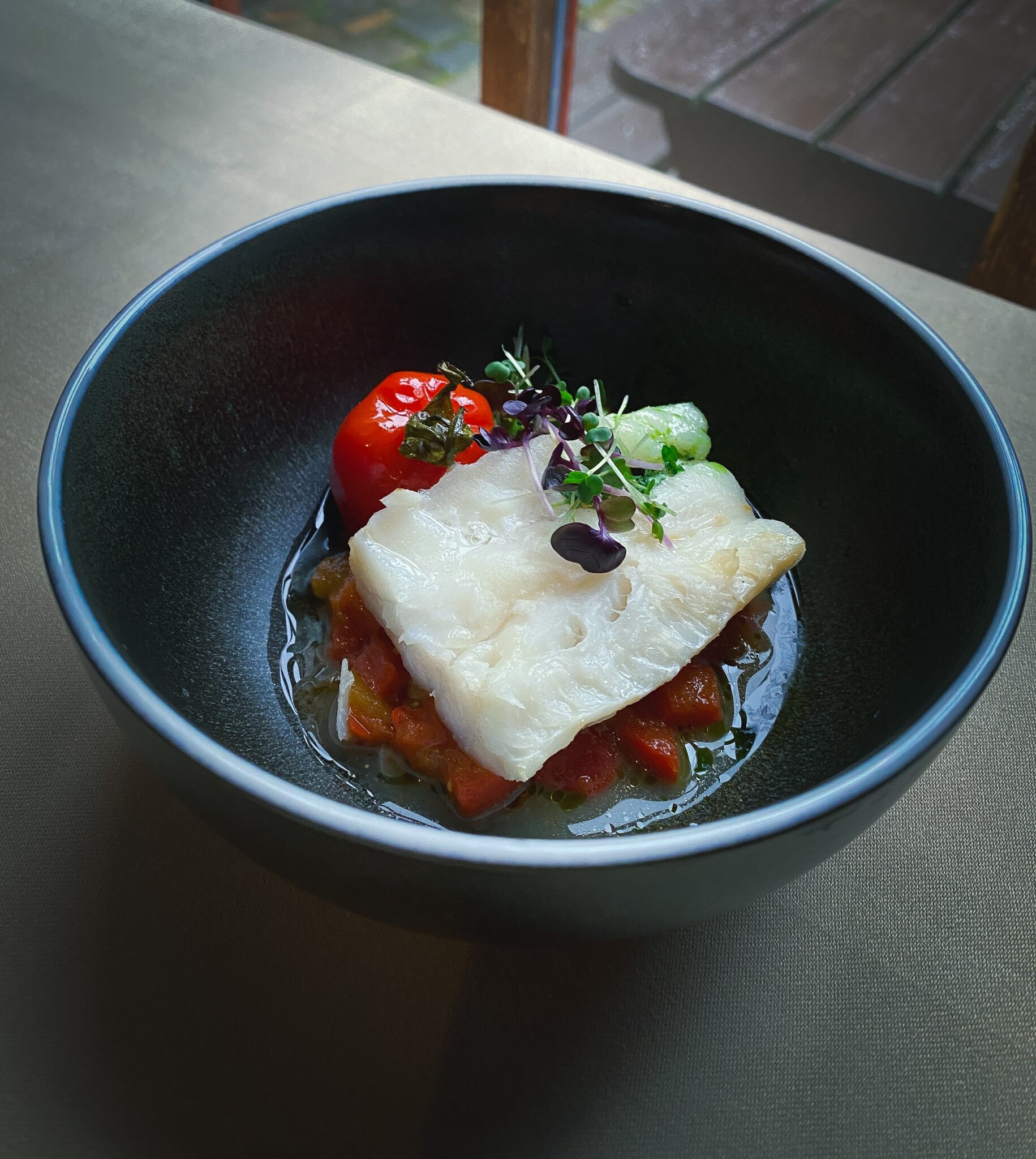
steamed Stockfish and crispy Fenalår
Stockfish stew from Veneto, Italy
Polenta, Onion and Parmesan
And/Or
Beetroot, Leek and oven-baked Baby Potatoes,
creamy Onion Sauce flavored with Wild Garlic Butter
Almonds and Raspberries


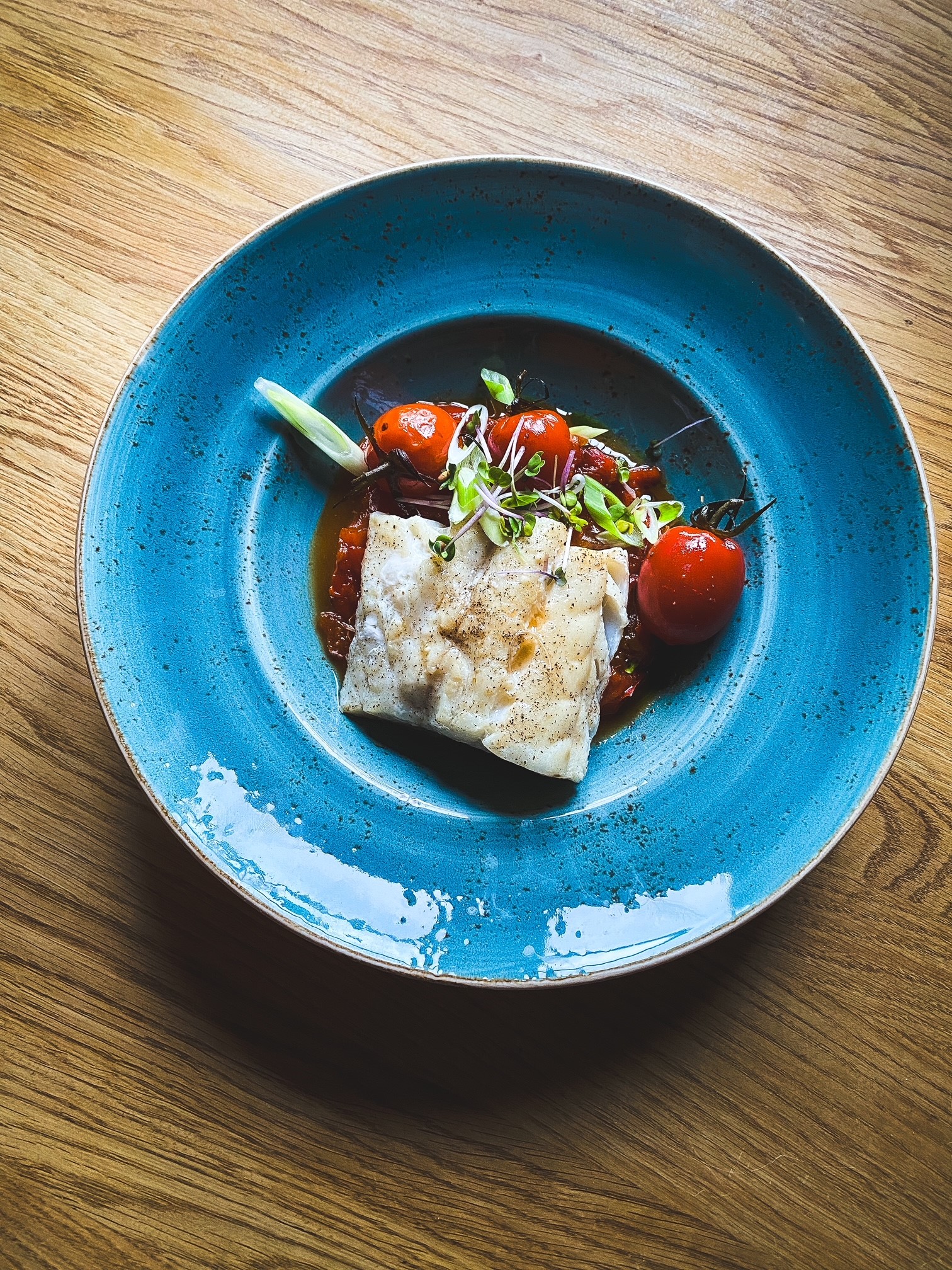
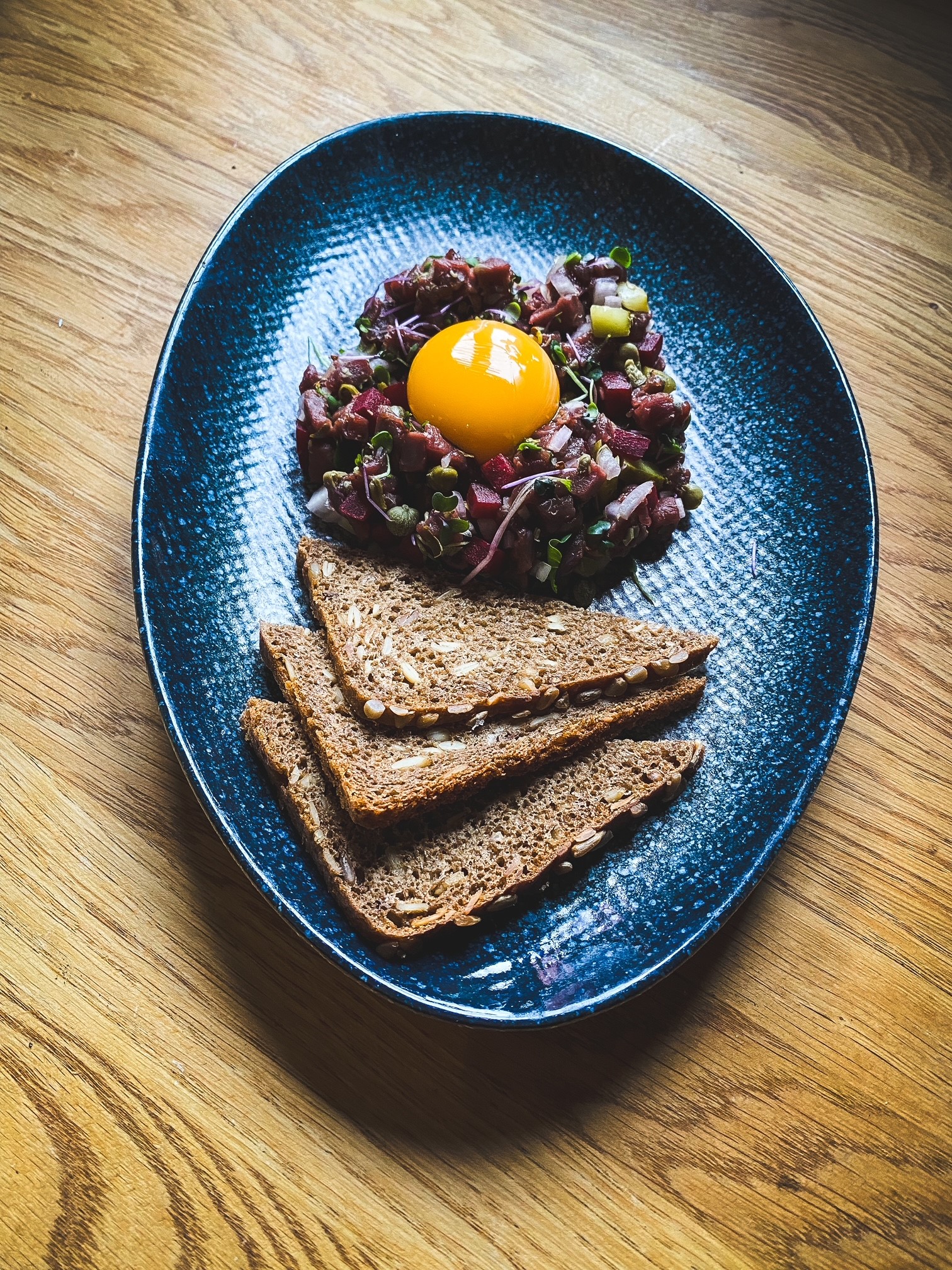
Our signature dish «Bacalà alla Vicentina» has a long history dating back to the time of the Hanseatic League when the Germans controlled the export of stockfish at Bryggen in Bergen. The «Confraternita del Bacalà alla Vicentina» is the organization that has taken on the task of preserving and spreading the recipe for the dish, which is one of Italy’s defined national dishes. Only a few restaurants have been honored to officially prepare «Bacalà alla Vicentina», and Bryggen Tracteursted is one of two restaurants in Norway.
The Italian merchant Pietro Querini from Venice sailed in 1432 from Crete and, after a shipwreck in the North Sea, ended up on Røst, one of the islands in Lofoten. Some of the crew perished, while a few managed to save themselves on one of the islets until they were rescued by the inhabitants of a nearby island. The survivors were welcomed, fed, and cared for.
Here, Pietro Querini discovered that the inhabitants had a strange way of preserving fish. They dried the fish in the air for several months until it became as hard as a stick.
When the Venetian merchant returned home after a long journey, he brought with him this peculiar stockfish. The raw materials were quickly exchanged for other foodstuffs and services in Venice. It was particularly popular among the less affluent population, as stockfish was easy to store, yielded high returns in trade, and had low cooking costs. Thus, stockfish found its way to Italy and is preserved to this day in the dish «Bacalà alla Vicentina». Today, most Norwegian stockfish goes to Italy.
Querini was likely not the one who introduced stockfish to Italy; that is a myth. But the story is exciting nonetheless. Venetian merchants already traded in England and Flanders, where stockfish was an important raw material and was already known before Querini’s shipwreck in the North Sea. However, he and his crew were likely the first to witness firsthand how stockfish was made.
The stockfish trade has been important for both Norwegian culture and economy. During the Viking Age, local chieftains engaged in the export of stockfish to Western Europe. According to the Icelandic «Egil’s Saga», Torolv Kveldsulvsson was the first known exporter of stockfish from the north. According to the saga, he sailed with cod from Lofoten to England to acquire clothes and other goods they needed.
The 11th century is considered the period when stockfish truly broke through as an international commodity. England was long the main market for Norwegian stockfish. Most of the trade went via Trondheim and Bergen on English and German ships. The presence of the German Hanseatic merchants in Norway steadily increased, especially in Bergen.
In 1294, the Norwegian monarchy reached a settlement with the German merchants – which was very favorable for the Hanseatic cities, as they now gained the right to free trade in Norwegian towns.
Around 1300, the Hanseatic merchants had become the dominant exporter of stockfish from Norway to England, Germany, and Western Europe. Bergen had now become Norway’s most important export port for stockfish. Demand for stockfish saw a dramatic increase across Europe. Growing urban populations and fasting were the main reasons for this.
In 1432, the Venetian merchant Pietro Querini was shipwrecked in the North Sea. He came ashore in Lofoten and later described the stockfish production with great admiration. This contributed to spreading the knowledge of stockfish far beyond Norway’s borders.

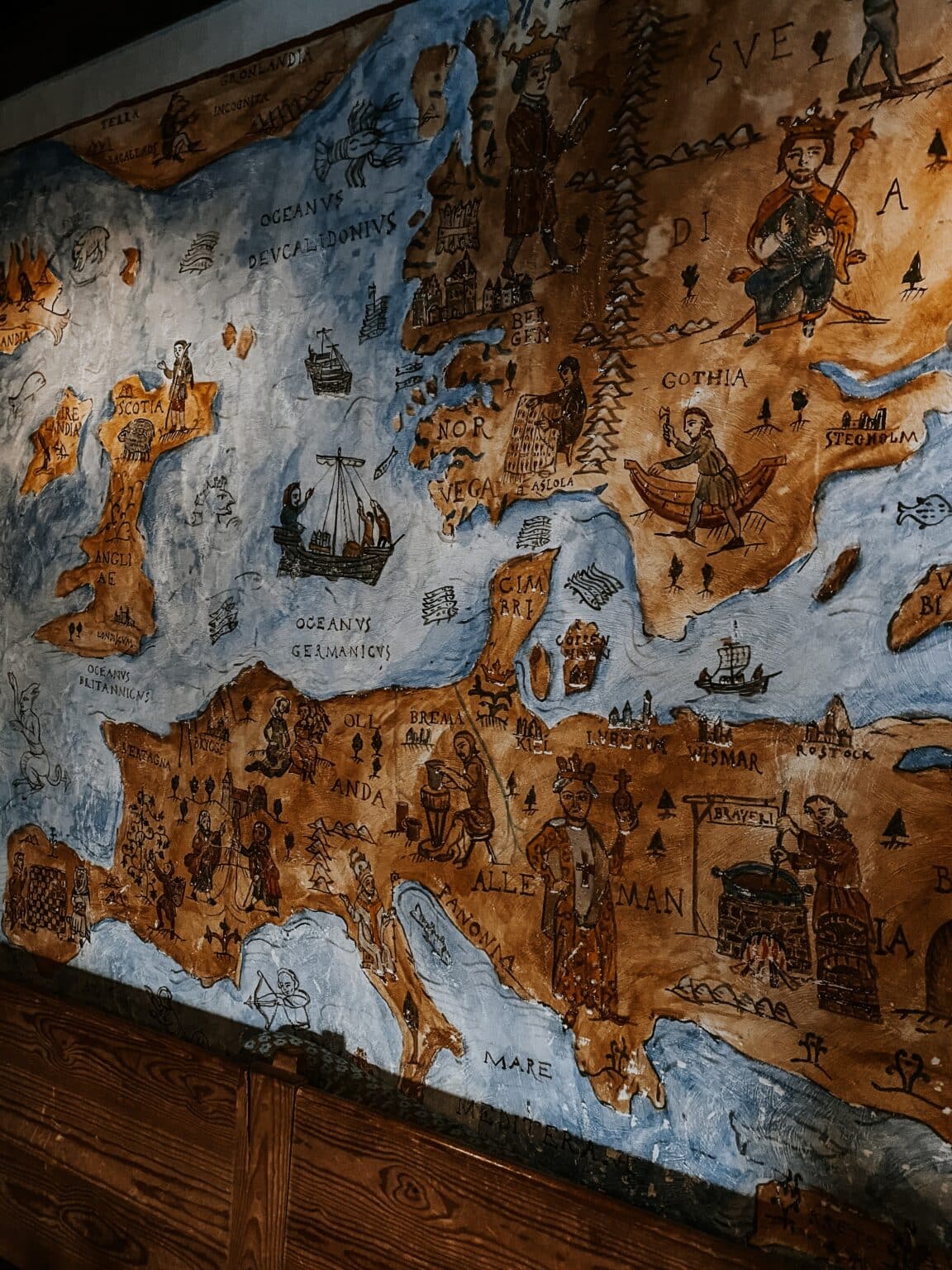
In the period 1350 – 1500, the price of stockfish increased due to reduced production and gradually rising demand. The plague that ravaged during the period 1349 – 1654 had a significant impact on settlement and trade in Norway and led to many abandoned farms. This resulted in limited access to stockfish.
In the 1740s, a new period of prosperity began in Norwegian fisheries. Stockfish exports tripled in the period leading up to the turn of the century.
Around 1800, the jekt trade to Bergen was still central, but during the 19th century, the Bergen merchants lost their monopoly, and Trondheim once again became an important stockfish port. Lofoten remained the major fishing ground in the north throughout this time.
Until 1910, with a few exceptions each year, more than 20,000 fishermen came to Lofoten. During the boom at the end of the 19th century, up to 30,000 fishermen were present. From 1930 to 1950, the number was over 20,000 fishermen, but from 1954, the number sharply declined and has continued to decrease since then.
Before we had the ability to store our raw ingredients cold or frozen, it was important to master various types of preservation, such as smoking, pickling, curing, drying, salting, or air-drying, when food needed to be stored over time. Many of these preservation methods have evolved to become part of our modern food culture, and some of the most exciting traditional dishes are based on these methods.